استراتيجية بارولي في الروليت (مارتينغال العكسي)
استراتيجية بارولياستراتيجيةباروليتدرّج إيجابي: ضاعف الرهان إذا ربحت، وارجع للبداية بعد خسارة أو بعد ثلاث مرات ربح متتالية. يقولون له بعد: مارتينغال العكسي.اقرأ الموضوع كامل ← في الروليت تضاعف الرهان بعد الربح، وترجعه للبداية بعد الخسارة أو بعد ثلاث أرباح متتالية.

It does not beat the wheel; it only changes how the losses arrive. A completed uncapped three-win cycle nets either +7 base units or −1. Winnings remain your money when you stake them again; expected loss depends on total turnover.
امشِ مع النظام
الربح يقدّم مبلغ الرهان خطوة وحدة. والخسارة، أو ثالث ربح، ترجعك للبداية.
مبالغ الرهان والنتايج بوحدات الرهان الأساسي.
كيف يشتغل نظام بارولي في الروليت؟
Bet one unitالمالالوحدةمبلغ الرهان الأساسي اللي يمشي عليه النظام أو اللاعب. والتدرّجات ينوصفون بالوحدات عشان تصلح لأي طاولة.اقرأ الموضوع كامل ←. Win, and leave it all on the table: the next bet is two. Win again, and it is four. Win a third time, collect seven units of profit and go back to one. Lose at any point and you go back to one as well. That is the whole system. If the progressionاستراتيجيةالتدرّجأي قاعدة تغيّر فيها مبلغ الرهان على حسب النتائج اللي قبل. التدرّجات السلبية ترفعه بعد الخسارة، والإيجابية بعد الربح.اقرأ الموضوع كامل ← runs without clipping, a losing cycle ends one unit below its starting balance. A loss at the four-unit stage still gives back four units from the balance immediately before that spin. Three even-money wins in a row happen with probabilityرياضياتالاحتمالفرصة إن نتيجة معيّنة تصير، من 0 إلى 1 أو من 0% إلى 100%. لرقم واحد: 1/37 = 2.70%.اقرأ الموضوع كامل ← (18/37)³ = 11.5%, about one cycle in nine.
كيف تكون الجلسة؟
Completed cycles net −1 unit unless three consecutive wins produce +7. Over exactly 100 spins, an exact finite-state calculation gives about 38.43% net-profit probability and expected result −4.56 base units. This calculation starts at one unit, resets after a loss or three wins, and assumes enough funds with no stake clipping. Bankrollالمالرأس مال اللعبالمبلغ الكامل اللي تحطه على جنب للعب. وإدارة رأس المال إنك تقرر كم منه تخاطر فيه في كل رهان وفي كل جلسة.اقرأ الموضوع كامل ← limits and interrupted cycles change the distribution.
- p10 −$500
- p25 −$500
- الوسيط −$300
- p75 +$30
- p90 +$320

هل نظام بارولي ينفع؟
It does not create a positive expected return. It changes both the distribution and turnoverالمالإجمالي المراهناتإجمالي المبلغ اللي تراهن فيه خلال جلسة أو فترة، ومعه الأرباح اللي رجعت تراهن فيها. يقولون له بعد: handle، action.اقرأ الموضوع كامل ←, so expected session loss can change. Let p = 18/37. Win 7 with probability p³ = 0.115; lose 1 with probability 1 − p³ = 0.885. Expected result per cycle: 8p³ − 1 = −0.078909 units. Expected units wagered per cycle: 1 + 2p + 4p² = 1 + 0.973 + 0.947 = 2.92. Using unrounded values, −0.078909 / 2.919649 = −1/37. This is the standard single-zeroالعجلةالصفرالخانة الخضراء الوحيدة اللي ما يغطيها لا رهان دفع متساوي ولا دزينة ولا عمود؛ ومنها تجي ميزة الكازينو. يقولون له بعد: الصفر الواحد، 0.اقرأ الموضوع كامل ← expected lossرياضياتالخسارة المتوقعةالقيمة المتوقعة مضروبة في إجمالي المبلغ اللي راهنت به؛ يعني متوسط اللي تخسره في جلسة أو في فترة.اقرأ الموضوع كامل ← per unit wagered.
The tempting thought is that the pressed chipsالمالالفيشةقطعة تمثّل مبلغ ثابت، تحطها على لوحة الرهان عشان تراهن. يقولون لها بعد: check.اقرأ الموضوع كامل ← are the casino’s money, so staking them costs nothing. They are yours from the moment they are paid, and each one put back on the table carries the same 2.70%.
وش يصير لو انتظرت أربع أرباح متتالية؟
Consider an explicit four-win model: independent standard single-zero bets on redرهانالأحمررهان دفع متساوي على الأرقام الحمراء الـ18. بالفرنسي: rouge.اقرأ الموضوع كامل ←, one-unit base, no table limitالطاولةحدّ الطاولةأقل رهان وأكبر رهان مسموحين. والحد الأقصى هو اللي يوقّف تدرّجات المضاعفة.اقرأ الموضوع كامل ←, and stopping at the first completed four-win cycle or when the bankroll is exhausted. Four wins turn one unit into 16, a net gain of 15, with probability p = (18/37)⁴ ≈ 5.6012%. Each failed cycle loses one unit. With 15 starting units, the chance of completing a four-win cycle before ruin is 1 − (1 − p)¹⁵ ≈ 57.9%. That is higher than the 48.6% win probability of a single 15-unit red bet, but the rewards differ. Conditional on completing the cycle before ruin, the average net session gain is about 9.1 units after earlier failed cycles. Including failures, expected net result is about −1.07 units, versus −15/37 ≈ −0.41 for the single bet. A greater success probability does not imply a better expected return.
هل يفرق وين توقف؟
يفرق في الشكل بس. بارولي إلى ربحين (تقبض 3) أو إلى أربع أرباح (تقبض 15) يغيّر معدل الإصابة وحجم الربح، مو الميزة. و«البارلاي» على رهان الرقم الواحد (تخلي ربح 35 مقابل 1 على الطاولة) هو نفس الفكرة بس مع p = 1/37 ودفعالمالالدفعاللي يرجّعه لك الرهان الرابح، ويكتبونه بصيغة «X مقابل 1» زيادة على مبلغ الرهان اللي يرجع لك.اقرأ الموضوع كامل ← 1,295 مقابل 1 لو صاب مرتين متتالية، وعشان كذا هو غالبًا سالفة يتناقلها الناس، مو شي يسوّونه فعلًا.
مين يختاره، وليش؟
The rule limits a completed losing cycle to one base unit below its starting balance, provided stakes are not clipped. Repeated failed cycles can still exhaust a bankroll, and a loss after wins gives back accumulated gains. Under the stated fair-wheel model, expected loss is 1/37 of expected turnover; a session need not lose exactly that fraction.
المحاكي · بارولي
2,000 جلسة رهانات دفع متساوي تبدأ برأس مال لعب $1,000.
الرهان الأساسي $10 · حدّ الطاولة $500 · 100 دورة في كل جلسة
أسئلة
أأمن بمعنى إنه ما يقدر يجيب لك خسارة وحدة كارثية. بس مو أرخص: الخسارة المتوقعة لكل وحدة تراهن فيها هي نفسها بالضبط.
أي نقطة وقوف نتيجتها الرياضية وحدة. الثلاثة هي المتعارف عليها لأن الربح (7 وحدات) تحس إنه يستاهل الانتظار، ومعدل الإصابة (11.5%) مو ميؤوس منه.
فقرة ضحك
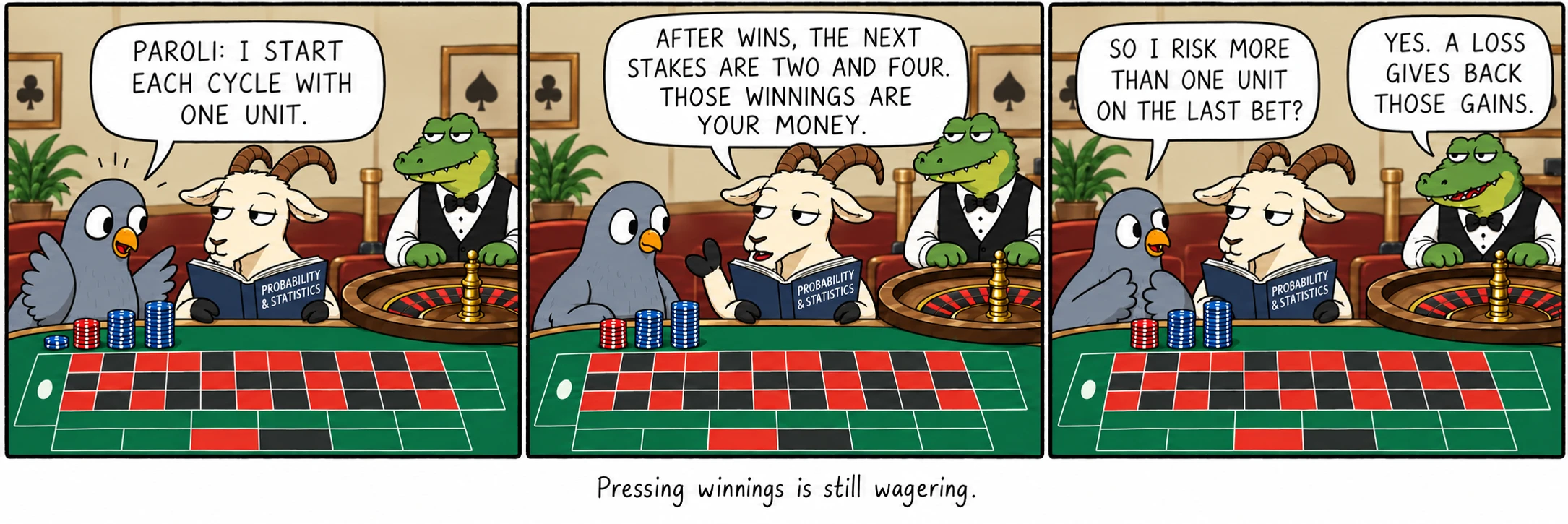
لمّا ترجع تراهن بالأرباح، هذا رهان كمان.
المصادر
- RouletteDoc. نظرة عامة على استراتيجيات الروليت.
- Roulette77. شرح الاستراتيجية مع أمثلة.
- Ethier, S. N. The Doctrine of Chances: Probabilistic Aspects of Gambling.
- Epstein, R. A. The Theory of Gambling and Statistical Logic, 2nd ed.
- Taylor, D. G. Games, Gambling, and Probability: An Introduction to Mathematics, 2nd ed.